A cracked tooth can change the way you eat almost overnight. You may start chewing on the other side, avoiding crusty bread, or lowering a forkful of food because you are not quite sure how the tooth will react. A missing tooth can bring its own frustrations, from food collecting in the space to the bite feeling less balanced than it used to.
Crowns and bridges address those concerns in separate ways. A crown repairs and protects a tooth that is still present. A bridge replaces one or more missing teeth by using nearby teeth or dental implants for support.
At the Northgate office of Reen Chung, DDS in Seattle, WA, Dr. Reen Chung looks at the tooth, surrounding gums, bite, and existing dental work before recommending treatment. The restoration needs to look natural, but it also needs to feel comfortable during meals and stay manageable to clean. Over time, a well-fitted crown or bridge should settle easily into the same routine as the rest of your teeth.
What Is the Difference Between a Crown and a Bridge?
A crown covers a tooth that is damaged, weak, or heavily restored. It rebuilds the visible part of the tooth and gives it a new chewing surface. Once it is cemented in place, the crown stays on the tooth and is cared for much like the rest of the smile.
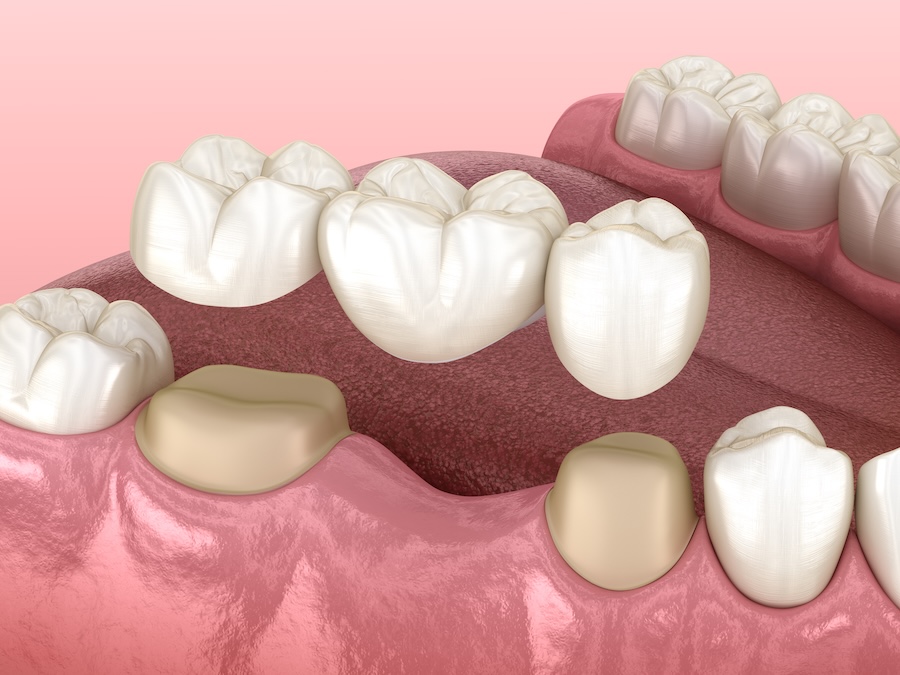
A bridge fills an open space where one or more teeth are missing. In a traditional bridge, the replacement tooth connects to crowns placed over the teeth beside the gap. The entire restoration is made as one piece so the neighboring teeth can hold the replacement securely.
A crown repairs a tooth, while a bridge fills a space. Sometimes the treatments overlap because a traditional bridge includes crowns on its supporting teeth. The final recommendation depends on whether there is a tooth to restore, a space to fill, or both.
When a Tooth May Need a Crown
Fillings can repair a variety of cavities, but there comes a point when there is not enough healthy tooth left to support another large filling well. The remaining walls may be thin, cracked, or weakened by years of chewing. A crown covers the tooth more fully and helps hold those areas together.
Crowns are also common when a large old filling begins to break down. The filling may loosen, crack, or separate slightly from the tooth, while the enamel around it becomes more fragile. At that stage, replacing it with an even larger filling may leave the tooth with very little support.
A crown may also be recommended after root canal treatment, especially on a premolar or molar. The root canal treats the tissue inside the tooth, while the crown rebuilds the outside so it can handle chewing again. One addresses the source of the problem, while the other gives the tooth a dependable surface for everyday use.
Crowns Can Help With Cracks and Wear
A cracked tooth may hurt when you bite down, release pressure, or drink something cold. Some cracks can be covered with a crown before they spread farther. Others extend too deeply below the gumline or into the root, which may make the tooth difficult to save.
The tooth can look completely normal and still object every time you land on one particular bite of food. That is why pain that comes and goes is still worth checking. X-rays, bite testing, and a close look at the tooth can help Dr. Chung identify where the discomfort is coming from.
Crowns can also rebuild teeth that have worn down from grinding or clenching. The lost height and shape are restored carefully so the tooth does not feel too tall in the bite. When several teeth show wear, Dr. Chung may need to study the pattern across the mouth before treating one tooth by itself.
When a Bridge May Be a Good Option
A bridge may be considered when one or more teeth are missing and the teeth beside the space can provide dependable support. It restores the visible gap and adds another surface for chewing. Because it stays in the mouth, there are no clasps to remove or appliance to take out at night.
A traditional bridge may be especially useful when the teeth beside the gap already need crowns. In that case, the same restoration can repair those teeth while replacing the missing one between them. A bridge may also be considered when implant treatment is not preferred or does not fit the patient’s health, timing, or treatment goals.
A bridge replacing a front tooth is planned with appearance and speech in mind, while one replacing a molar must manage stronger chewing pressure. Dr. Chung also checks the gums, bite, and available room so the restoration does not feel crowded. No one wants a replacement tooth that looks fine but turns every handful of almonds into a careful negotiation.
The Supporting Teeth Need to Be Healthy
A traditional bridge relies on the neighboring teeth to hold it in place. Those teeth handle their usual chewing pressure along with some of the force placed on the replacement tooth. They need enough healthy structure and bone support to manage that load.
Before preparing a bridge, Dr. Chung checks for decay, cracks, large fillings, gum disease, and movement. X-rays can reveal concerns beneath the surface that are not visible during the exam. A tooth may look calm from the outside while an old filling or loss of bone underneath tells a different story.
When one of the supporting teeth is too weak, another option may be more dependable. That could include an implant-supported restoration or a removable appliance. Since the bridge is connected, trouble beneath one side can eventually affect the entire restoration.
Crowns and Bridges Come in Different Materials
Crowns and bridges may be made from ceramic, porcelain, zirconia, metal, or a combination of materials. The best choice depends on where the restoration sits, how much pressure it handles, and how visible it is when you smile. A front tooth and a back molar rarely have the same job description.
Tooth-colored materials are often selected in visible areas because they can blend closely with enamel. Zirconia may be useful where strength is a priority, while other ceramics can provide more translucency near the front of the smile. Metal restorations are durable, although the color makes them less appealing in visible areas.
Dr. Chung can explain the choices based on the tooth being treated. Strength, appearance, available space, and the condition of the opposing teeth all influence the recommendation. The useful question is not which material sounds most impressive, but which one suits the work that tooth does every day.
A Natural Result Depends on More Than Shade
Color is important, but it is only one part of making a crown or bridge look natural. The length, width, surface texture, and way the restoration meets the gumline also shape the result. A close shade match can still look off when the tooth is too square, too thick, or slightly longer than its neighbor.
Front teeth often have subtle color changes from the gumline to the edge. They may also have a little translucency that helps them reflect light like enamel. Recreating some of those details keeps the restoration from looking flat or overly uniform.
Back teeth need grooves and contours that support chewing while allowing food to move away from the gums. The shape should also make the area practical to clean. A crown can look excellent in a mirror and still lose popularity quickly if lunch gets trapped beside it every day.
What Happens During Crown Treatment?
Crown treatment usually begins by numbing the tooth and removing decay, damaged material, or an old filling. The tooth is then shaped so there is enough room for the crown without making it bulky. A digital scan or impression records the tooth, nearby teeth, and bite.
A temporary crown protects the tooth while the final restoration is being made. It is held with temporary cement, so sticky candy, chewing gum, and very hard foods can loosen it. Brushing should continue, and floss is often pulled out through the side rather than lifted straight up so it does not catch the temporary.
When the final crown is ready, Dr. Chung checks the fit, shape, color, and bite before cementing it. The tooth may feel slightly unfamiliar at first because the tongue notices any new contour. It should not feel high, sharp, or uncomfortable when you bring your teeth together.
What Happens During Bridge Treatment?
A traditional bridge follows a similar process because the supporting teeth need to be shaped for crowns. The open space and surrounding teeth are recorded so the laboratory can create the connected restoration. A temporary bridge protects the prepared teeth and fills the gap while the final one is being made.
The temporary needs gentle care because it is held with weaker cement. Avoid foods that pull sharply on it, and clean beneath the replacement tooth with the method shown by our team. Calling after a temporary loosens is much easier than trying to balance it back into place before breakfast.
At the delivery visit, Dr. Chung checks the fit over the supporting teeth, the way the replacement tooth meets the gum, and how the bite closes. Small adjustments may be made before the bridge is cemented. Once the numbness wears off, the restoration should feel stable and comfortable during chewing.
Your Bite Should Feel Even
A new crown or bridge may feel unfamiliar for a day or two, but it should not touch before the rest of the teeth. A high spot can make the tooth sore and lead you to avoid chewing on that side. It can also place extra pressure on the porcelain or supporting tooth.
The difference often becomes obvious after the numbness wears off. You may notice that one tooth meets first or that your jaw keeps searching for a comfortable place to close. Tapping the teeth together every few minutes rarely improves the situation, though it is surprisingly hard not to test it.
Let us know when the bite feels uneven. A small adjustment can make the restoration feel much more comfortable. Waiting usually means spending several meals trying to steer food away from the same spot.
Some Sensitivity Can Happen After a Crown
A tooth may react to cold or pressure for a short time after crown treatment. The nerve inside the tooth has been through dental work, and the gum around it may also feel tender. Mild sensitivity should gradually become less noticeable.
A temporary crown may feel more sensitive than the final one because the material and cement provide less insulation. Once the permanent crown is placed, the tooth often feels more settled. Still, every tooth has its own pace, and some take longer to quiet down than others.
Call the office when pain becomes stronger, lingers after hot or cold drinks, wakes you at night, or makes biting difficult. Those symptoms may point to an irritated nerve or a bite concern. Checking the tooth early is usually simpler than waiting until it decides to interrupt an entire weekend.
Crowns and Bridges Still Need Daily Care
A crown cannot develop a cavity, but the natural tooth beneath it still can. Plaque collects where the restoration meets the tooth, especially near the gumline. Brushing with fluoride toothpaste and cleaning between the teeth help protect that edge.
Cleaning under a bridge takes one extra step because regular floss cannot drop between the connected teeth from the top. A floss threader, interdental brush, or water flosser can reach beneath the replacement tooth. We can help you choose the tool that fits the space without turning bedtime into an extended dental project.
Healthy gums help crowns and bridges look better and stay more comfortable. Routine visits also allow Dr. Chung to check the bite, supporting teeth, and edges of the restoration. Small changes are much easier to manage before they begin affecting meals.
Crowns and Bridges Can Wear or Loosen Over Time
Crowns and bridges are made for normal chewing, but they still experience years of pressure. Porcelain can chip, cement can weaken, and the teeth underneath can develop new decay. The bite may also change as other teeth wear or shift.
Grinding and clenching can add more force than a restoration receives during ordinary meals. A nightguard may be recommended when the wear pattern shows heavy pressure during sleep. Protecting the crown or bridge also helps protect the natural teeth around it.
Avoid using restored teeth to open packaging, bite fingernails, or chew ice. Dental porcelain is sturdy, but it does not need to moonlight as a pair of scissors. Ordinary eating is plenty of work.
How Long Do Crowns and Bridges Last?
There is no single lifespan that applies to every crown or bridge. The tooth underneath, material, bite pressure, cleaning routine, and location all affect how long it remains useful. A molar that handles most of the chewing faces a heavier workload than a front tooth.
The current condition tells us more than the age alone. A restoration that feels comfortable, stays sealed, and remains intact may still be serving the tooth well. One that is loose, cracked, painful, or trapping food needs a closer look.
A bridge may also need attention when one of the supporting teeth develops a problem. Because the restoration is connected, treatment on one side can affect the whole piece. Regular exams help us catch those changes before the bridge begins moving or causing discomfort.
How Do Crowns and Bridges Compare With Dental Implants?
A crown repairs a tooth that is still present. A bridge or implant can replace a tooth that is missing. When a tooth cannot be saved, both a traditional bridge and an implant-supported crown may be considered.
A bridge uses the neighboring teeth for support and usually does not require implant surgery. An implant stands in the missing-tooth space and does not depend on crowns over the teeth beside it. It does require enough bone and time for healing.
Dr. Chung can compare the options based on the health of the nearby teeth, the size of the space, the bite, and your preferences. A bridge may be a strong fit when the neighboring teeth already need crowns, while an implant may be appealing when those teeth are healthy. The best choice depends on what is already happening in that part of the mouth.
Dental Crowns and Bridges at Reen Chung, DDS in Northgate
Crowns can rebuild teeth weakened by decay, cracks, large fillings, root canal treatment, or wear. Bridges can replace missing teeth while restoring a stable surface for chewing. Both depend on a comfortable bite, healthy support, and a design that works naturally with the rest of the smile.
At the Northgate office of Reen Chung, DDS in Seattle, WA, Dr. Reen Chung can examine a damaged tooth or open space and explain the available options. We can compare a crown with a filling or discuss a bridge alongside implant treatment when a tooth is missing. You will also know what to expect during the temporary stage and how to care for the final restoration.
Schedule a visit when a tooth is cracked, heavily filled, painful during chewing, or missing altogether. Bring any questions about materials, appearance, or an older restoration that no longer feels right. We would be happy to help you find a repair that feels comfortable, looks natural, and lets you get back to eating without giving every bite a second thought.
Contact Us