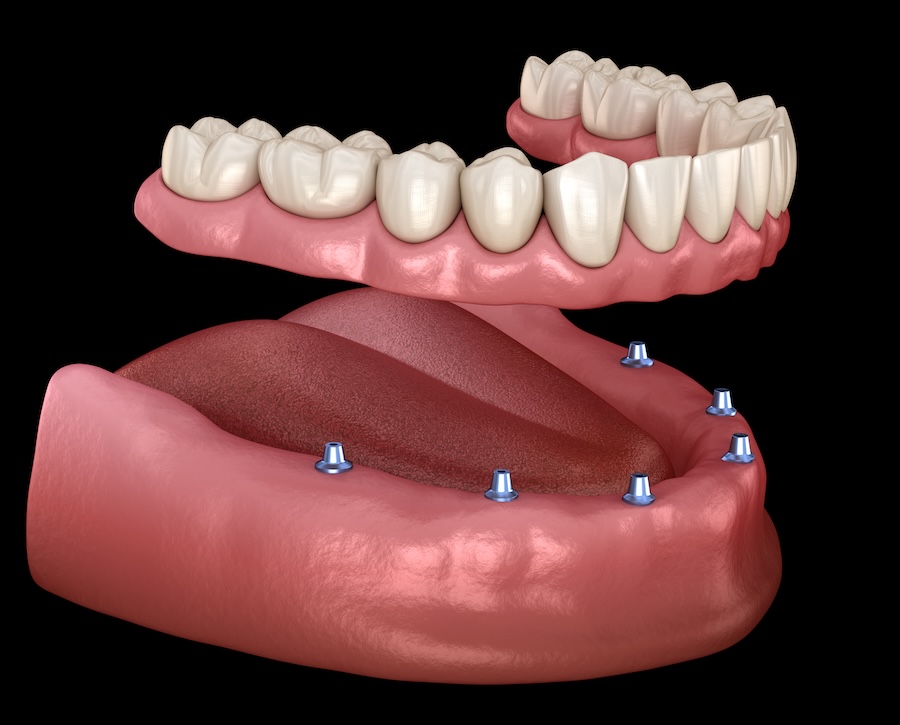
If your dentures shift, rub, or rely on constant adhesive to stay in place, it can wear on your patience — and your quality of life. At Reen Chung, DDS in Northgate, Seattle, Dr. Reen Chung offers implant-supported dentures, also called overdentures, to help patients feel more secure with how their dentures fit, function, and feel.
Instead of floating on your gums, overdentures connect to implants in the jaw. That added stability makes a difference in everything from mealtimes to conversations.
How Overdentures Work
Traditional dentures rest on the gums and stay in place with suction or adhesive. Overdentures are anchored to a few small dental implants that act like secure foundation points. The denture “clicks in” to those implants for better hold and less movement.
That connection means fewer sore spots, less slipping, and more confidence that your denture will stay put when you need it to — no adhesive required.
Better Fit Makes Daily Life Smoother
When dentures shift, even slightly, it can throw off how you talk, eat, or interact with people. Overdentures reduce that day-to-day worry.
They help by:
- Staying more stable while eating
- Reducing irritation or rubbing
- Making it easier to speak naturally
- Giving you a break from denture glue
That extra peace of mind adds up — especially in social settings or during meals.
More Chewing Power, More Food Options
When dentures feel loose, many people start avoiding crunchy or chewy foods out of habit. Anchoring the denture with implants helps restore bite strength, so you don’t have to second-guess what’s on your plate.
You’ll likely notice:
- A stronger, more confident bite
- Easier chewing
- A wider range of meals you actually enjoy
Many patients say the change is noticeable within days.
A More Natural Feel in Social Moments
With a denture that feels secure, you can stop thinking about it all the time. Whether you’re laughing, eating with friends, or speaking up in conversation, overdentures give you the freedom to be present — not distracted by your teeth.
Who Might Be a Good Fit for Overdentures
If you’ve had issues with traditional denture fit, or if you’re ready for something more secure, overdentures may be worth considering. Dr. Chung will evaluate your bone levels and overall oral health to see if implants are a good match. In some cases, a bone graft may be needed first to build a strong foundation.
What to Expect from the Process
Every patient is different, but here’s what most overdenture plans involve:
- Consultation and Scans – Dr. Chung will take images and assess your current denture and bone structure.
- Implant Placement – A few small implants are placed in the jawbone.
- Healing Period – The implants fuse with your bone over a few months.
- Denture Adjustment – Your denture is modified or a new one is made to attach to the implants.
Once healing is complete, you’ll feel the difference in stability almost right away.
Cost and Coverage
Implant-supported dentures cost more upfront than traditional dentures, but many patients find they save on adhesives, relines, and frustration. At our office, we’ll walk you through insurance and financing options to help make treatment manageable.
Overdentures at Reen Chung, DDS in Northgate – A More Reliable Way to Wear Dentures
If you’re tired of managing slipping dentures or avoiding certain foods, implant-supported dentures might be a better fit. At Reen Chung, DDS, Dr. Chung can explain your options, show you what’s possible, and help you move forward with care that feels right for your life.
Call today to schedule a consultation and find out how overdentures can help you feel more secure in your smile — every single day.
Contact Us